
How Arrest Warrants Work in Chippewa County
Behind every Chippewa County arrest warrant sits a judge's decision that probable cause exists. In Minnesota, the paperwork starts with a criminal complaint and whatever supports it. Rule 3.01 then kicks in. It requires a warrant or a summons once the complaint shows probable cause and names the defendant. The judge picks which one. The rule leans toward a summons whenever that will work. A warrant is the choice when the person is unlikely to respond, cannot be located, or needs to be arrested right away to prevent harm. That is also why a fine-only misdemeanor usually arrives by mail rather than by squad car in Chippewa County. Not every citation turns into an arrest warrant.
Chippewa County Warrant Rule 3.01
Rule 3.01 is the provision that turns a Minnesota complaint into real process, and it does three jobs. It sets the probable-cause standard, lays out the warrant-or-summons choice, and names who is authorized to execute the order. It also spells out when a warrant beats a summons. That matters in Chippewa County because two people facing similar charges can walk away with completely different paperwork. The complaint itself, not any law-enforcement summary, is the factual foundation of the warrant. Anyone who wants to see what a Chippewa County warrant actually rests on should ask the court about the public parts of the file. You can read the current text at the Minnesota rule on complaints, summons, and warrants.
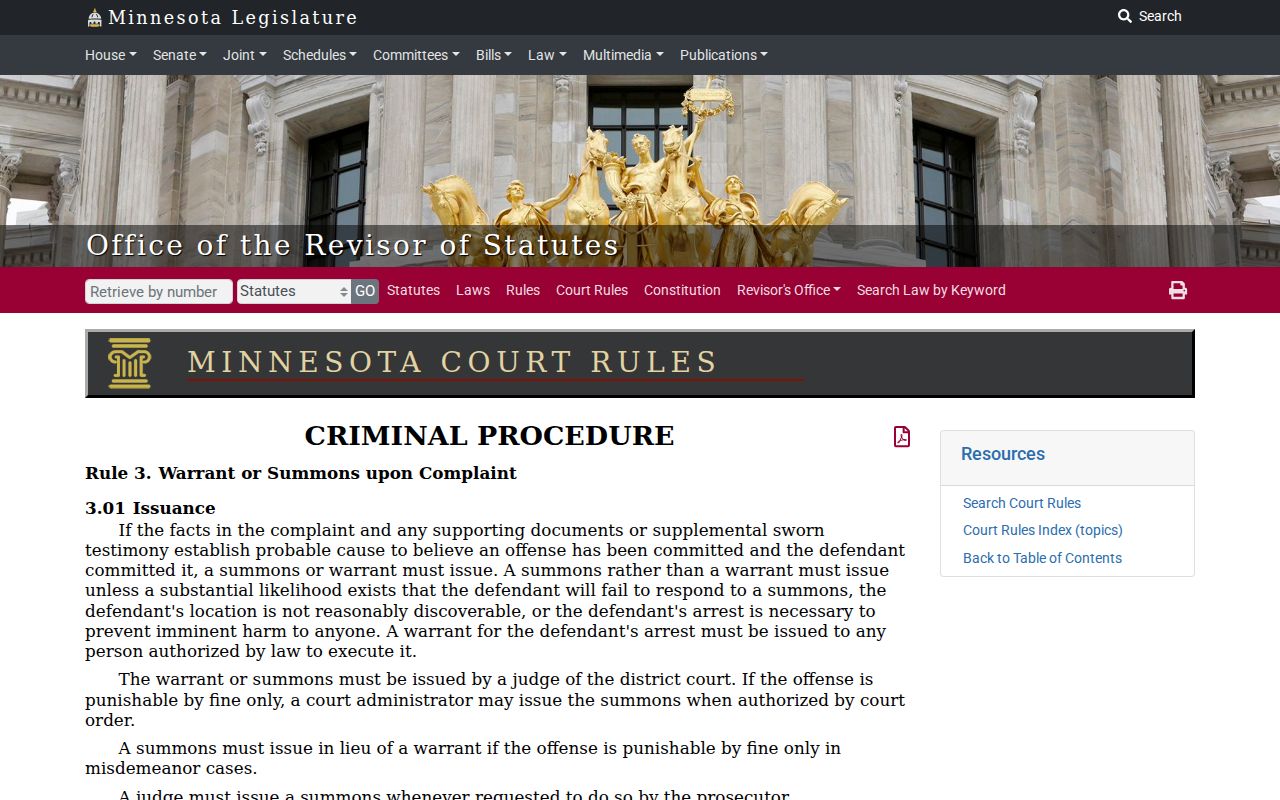
In Chippewa County, the rule makes a summons the default and treats a warrant as the exception.
Arrest Warrants: What They Contain
The legal warrant and the public listing are different documents in Chippewa County. The court file holds the complaint, the probable-cause facts, the charge and statute, the execution and return, the release conditions, and every status change. The public warrant table shows only a small slice of that.
| Warrant Number | A county-prefixed identifier such as 12-CR-YY-NNN. |
|---|---|
| Subject Name | The name recorded by the issuing agency, which may not match every name the person uses. |
| Date of Birth | The disambiguating field on the public table. Provide it to an agency, never to a public page. |
| Issue Date | When the order was issued or entered. |
| Charge Classification | Felony, Gross Misdemeanor, or Misdemeanor. |
| Bond or Bail Amount | A figure with no stated bond type. |
| Missing Fields | No issuing judge, no court, no serving agency, and no status-change date appear on the public table. |
Who Serves a Chippewa County Arrest Warrant
Minnesota Statutes section 629.30 lets a peace officer execute a warrant. In Chippewa County the sheriff is the countywide channel. City departments handle their own local matters. Federal orders follow a separate path.
| Agency | Public Role | Contact |
|---|---|---|
| Chippewa County Sheriff's Office | Countywide enforcement; publishes the warrant table | 320-269-2121 |
| Montevideo Police Department | City police with 24-hour service | Dispatch 320-269-8808; administration 320-269-9402 |
| Clara City Police Department | Local police contact listed by the city directory | 320-847-3221 |
| U.S. Marshals Service | Federal warrants and the North Star Fugitive Task Force | District of Minnesota offices |
Which agency holds the assignment shapes what happens next. Ask the Chippewa County court which office is responsible before you plan a step.
How Warrants Get Served in Chippewa County
Service happens when a peace officer acts on the order. That can occur at a traffic stop, at home, at the courthouse, or during a scheduled appearance. Chippewa County publishes no warrant unit, no stakeout policy, and no notification practice. So any prediction about how or when an officer arrives is a guess. What the public record does show is that service changes the entry itself. Once a Chippewa County warrant is served, the confidentiality that can attach to warrant-index data no longer applies the same way, and the case moves to its next court event. That is one more reason to confirm status with the court. A list with no status column cannot tell you where a case stands.
Chippewa County Warrant Bond Amounts
The Chippewa County warrant table publishes a Bond or Bail Amount column and nothing more. It says nothing about the type of bond. Cash, surety, personal recognizance, or some mix is all possible. It also says nothing about where or when the bond gets posted. Treating the number as a price is a common and expensive mistake. For surety bonds, courts use the statewide appearance bond form, CRM702. The form secures appearances only. It cannot pay fines, surcharges, or costs, and it stays valid for 180 days after the agency signs it. Surety agents must be approved by the State Court Administrator's Office and licensed through Minnesota Commerce. Cash works differently, and only a judge can order a refund.
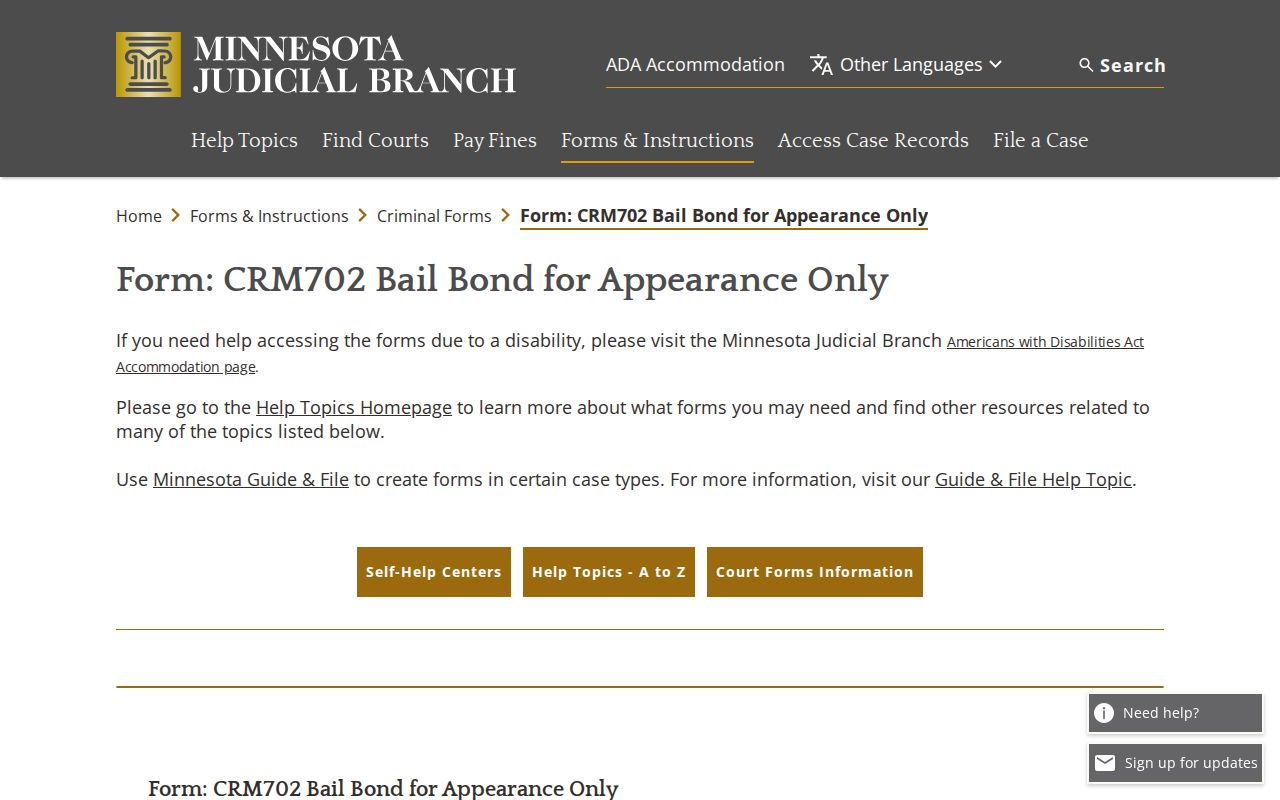
The form's own narrow wording shows how little a bond figure in a Chippewa County warrant row actually tells you.
Arrest Warrants, Summonses, and Bench Warrants
Minnesota, including Chippewa County, uses three instruments that people often blend together. A summons orders an appearance. An arrest warrant authorizes custody on probable cause. A bench warrant enforces an obligation in a case that already exists. Which one you receive shapes everything that follows.
| Feature | Summons | Arrest Warrant | Bench Warrant |
|---|---|---|---|
| Basis | Probable cause plus a preference for notice | Probable cause plus a risk the rule names | A missed court obligation |
| Authorizes custody | No | Yes | Yes |
| Case status | Charges filed or pending | Charges filed | An open case already on the calendar |
| First step | Appear on the date given | Counsel, appearance, or bond | Contact the issuing court |
Ask the Chippewa County Court Before Appearing
Showing up on purpose feels safer than waiting, and it can still end in custody. The Minnesota criminal FAQ says so plainly and recommends legal advice when a person is unsure. Chippewa County publishes no walk-in surrender window, no booking hours for voluntary appearances, and no bond-counter schedule. Call District Court Administration at 320-269-7774 and the sheriff at 320-269-2121 first. Ask what the court requires and whether bond is set. Ask what form is accepted, where it posts, what identification to bring, and what happens after arrival. If a lawyer can contact the Chippewa County court for the person, that is usually the calmer route.
Handling an Arrest Warrant in Your Name
Work the steps in order. In Chippewa County, let a lawyer handle every piece that goes through the court. Each step yields facts the next one depends on, and once custody is possible the order matters.
- Confirm the warrant and the issuing case with the sheriff and District Court Administration.
- Hire a lawyer or apply for a public defender if the case qualifies and income is limited.
- Ask counsel about a new date, a recall motion, or a planned appearance.
- Ask what bond is set, what form is accepted, and where it must be posted.
- Attend the appearance and keep every receipt and order.
- Follow through on the underlying case, because the warrant is only the entry point.
Important: Do not wait on an active arrest warrant and do not walk into a counter without asking first, because an unplanned appearance can end in custody.
A Chippewa Warrant Is Not a Conviction
A Chippewa County warrant marks a step in a case, nothing more. A judge found probable cause. The person has not yet come before the court on it. That is all a row on the public table tells you. Plenty of these cases later end in dismissal, diversion, or a plea to a lesser charge, and the public sheet never shows which way one went. It also carries no outcome history, so a warrant recalled last month may have simply dropped off the next run. Read a row as a signal to act, not a conclusion. For a Chippewa case status today, only the court can answer, so ask the clerk of the issuing court.