
Milan Warrant Checks
Milan keeps no city court and posts no warrant list. A warrant check starts at the city office and climbs to the county. Expect a couple of calls, and note every answer.
- Call the Milan city office at 320-734-4411 and ask who issued a local citation and where it was filed.
- Scan the Chippewa County Sheriff's Active Warrant Listing, the county's published warrant table.
- Call the Sheriff's Office at 320-269-2121 to ask how it confirms a warrant and which court holds the case.
- Call District Court Administration at 320-269-7774 about a court date, a recall, or a case file.
- Try Minnesota Court Records Online with a case or citation number, then talk to a lawyer.
Milan City Office and Warrant Questions
The city office is the sensible first stop when a Milan citation is what started the trouble. Ask who issued the paper, which agency keeps the record, and where the filing landed. Those answers route every call after that. Keep personal details off an unverified channel. A full date of birth and the story of the case belong only with the office that actually holds the file. Milan lists its officials and service contacts at the City of Milan site, which shows who to phone.
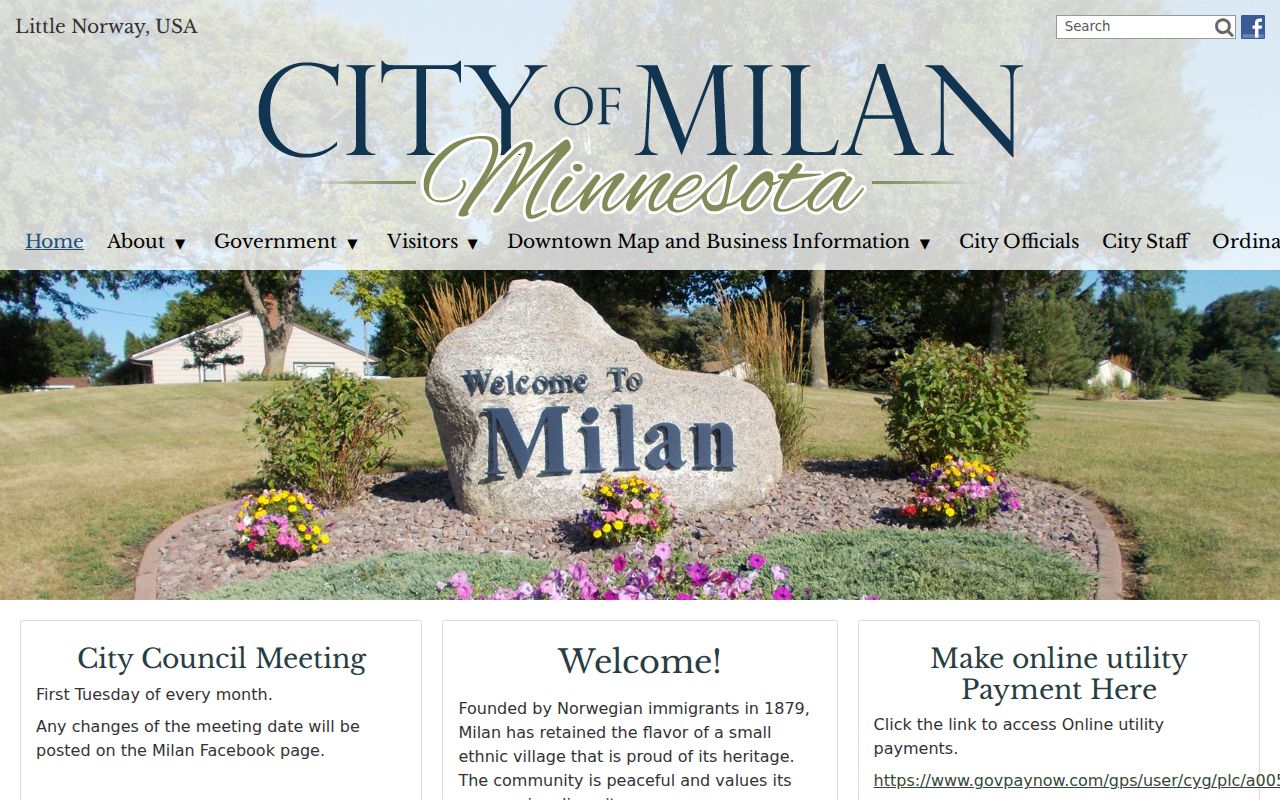
Use that site to find the right office, not to look up a name.
Policing and Courts in Milan
Milan posts no police department page, no non-emergency number, and no municipal court on its city site. That is a gap in access, not proof the town goes unserved. The court layer is clear. A Milan citation is filed in Minnesota District Court, Chippewa County, in Montevideo. The county sheriff publishes the public warrant table and runs county enforcement from there.
City of Milan office
City administration and city-held records
320-734-4411
Chippewa County District Court
Case files, court dates, and recall questions
320-269-7774
Chippewa County Sheriff's Office
Published warrant table and county enforcement
320-269-2121
What the Milan Officials Page Does Not Contain
Milan's officials page names the mayor, the clerk, the treasurer, and the other city roles. It is an administrative directory, nothing more. No case list appears on it. No warrant index, no court calendar either. A missing police or court link gets misread both ways. It does not show that local enforcement is absent, and it cannot turn a roster of names into a public record source. Use a city directory to reach a person, never as evidence about a warrant. A blank result proves nothing; only the issuing court can confirm one. Note: An officials page tells you who runs the city, not whether a case exists or what a court ordered.
Warrants in Milan: The Main Types
Warrants that reach Milan match the types seen across Chippewa County, from bench warrants to arrest warrants. A court issues each one, never the city. The county table does not label the type, so confirm it with the court.
| Warrant Type | How It Arises | Who Issues It |
|---|---|---|
| Arrest warrant | A complaint establishes probable cause in a case filed in the county | District Court judge or magistrate |
| Bench warrant | A missed court date, a missed payment, or a violated release condition | The judge handling the case |
| Sign-and-release warrant | A first failure to appear on a qualifying misdemeanor or gross misdemeanor | District Court under Minnesota Statutes section 629.415 |
| Traffic or citation warrant | An unpaid city citation or a missed traffic date | The district court that received the filing |
Three Calls for a Milan Warrant Question
With no city portal to lean on, a set order of calls saves days. Three calls cover the ground, and each answers what the others cannot. Start with the city office. Ask who issued the Milan citation and where it was filed. Then call the district court, which can say whether a case is on record, whether a warrant is attached, and what appearance or recall step the judge requires. Third, call the sheriff about the published table and the enforcement side. Stop once the court answers. That record controls, and nothing the other offices say changes it. Note: Write the citation number down before the first call, because every office will ask for it and the talk moves faster when you have it.
Milan Warrant Records: What They Show
A published entry for a Milan matter follows the county format. It is thinner than the court file behind it. Read the number and the date first, then the charge level and the bond figure.
| Warrant Number | A county prefix with a CR, VB, or FA style component, for example 12-CR-YY-NNN. |
|---|---|
| Name and Date of Birth | The fields used to match a person. Give the date of birth to an agency only. |
| Date of Warrant | When the warrant issued, which orders more than one row. |
| Bond or Bail Amount | An amount with no bond type beside it, so it is not a payment quote. |
| Offense Level | Felony, Gross Misdemeanor, or Misdemeanor. |
| Description | Short free text that may name a failure to appear or a traffic offense. |
A Milan Record and Minnesota Data Practices
The Data Practices Act governs government data at the agency that holds it. A record held by the city is requested from the city's responsible official. A record held by the county goes through the county's process. A court file follows court access rules instead. Milan publishes no fee schedule for warrant confirmation or citation payment, so do not treat county or district court fees as city fees. State law makes inspection free, allows a reasonable charge for copies, and requires any denial to name the statute behind it. Note: Direct each request to the office that possesses the record, since one sent to the wrong agency usually comes back blank.
Milan Warrants and Chippewa County
A Milan citation that turns into a warrant becomes a county court record. The issuing agency may execute it, and the district court controls it. The sheriff's published table is what lists it, with no city system in between.
Warrant flow: Milan city office or issuing agency › Chippewa County District Court › Chippewa County Sheriff › Minnesota BCA warrant file.
The county picture, from records requests to the courthouse campus, is laid out in the Chippewa County warrant records overview.
If Milan Sends You to Another Agency
City offices in Milan sometimes send people elsewhere. A Milan warrant question may land with the county, a state agency, or the issuing court. Take the handoff in stride. Ask for the office name, a phone number, and why the file moved. Then call the next place with the same details ready. If the record sits outside Chippewa County, the Milan sheriff cannot pull it. The office that holds the file is the one that answers the request. Note: write down who told you what, so you don't retell the story at every stop.
Accessing Milan Warrant Records
Minnesota treats government data as public unless a law says otherwise. That rule applies to a Milan record and a county record alike, though different offices handle each request. Inspection is free, and any denial must cite the statute it rests on.
Key Rules:
Minnesota Government Data Practices Act, section 13.03 covers inspecting and copying government data at reasonable times.
Minnesota Statutes section 13.82 can keep arrest-warrant-index data confidential until custody, service, or an appearance.
Minnesota Statutes section 260B.171 keeps juvenile records nonpublic except where the statute allows access.
No Milan Warrant Amnesty or Roundup Found
Milan runs no amnesty week and no safe-surrender event. The city posts no warrant roundup, no most wanted page, and no warrant phone line. For Chippewa County, the county's active list is the only public warrant table available. Be careful with rumors. A promised fee cut or safe surrender spreads fast and checks out rarely. Wait until an agency publishes the terms. A real program names its dates, its eligibility rules, and the participating court. Read the official county list itself rather than a repost of it; a copied entry creates risk, not help.